
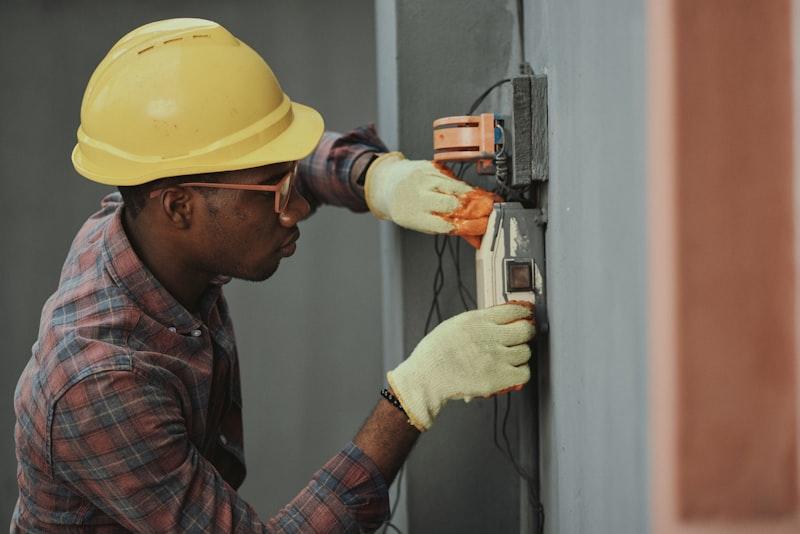
Construction sites are among the most hazardous environments for electrical equipment. Tools are dropped, cables run across wet concrete floors, and equipment is dragged in and out of vehicles daily. The combination of physical abuse, exposure to the elements, and high usage rates makes regular electrical testing not just a legal formality but a genuine life-safety necessity. In the UK, construction sites use a special 110V centre-tap-to-earth (CTE) system for portable tools to dramatically reduce the risk of electrocution.
What Is 110V CTE Equipment?
Standard UK mains voltage is 230V. If someone contacts a live 230V supply, the current passing through their body is sufficient to cause cardiac arrest. On construction sites, portable power tools are therefore run from 110V centre-tap-to-earth transformers. The transformer reduces the voltage to 110V, and the centre tap of the secondary winding is connected to earth. This means the maximum voltage from either conductor to earth is only 55V — still dangerous, but significantly less likely to be fatal than 230V.
110V CTE equipment is instantly recognisable by its yellow plugs and sockets. The yellow colour coding is standardised throughout the UK construction industry. Common 110V tools include angle grinders, circular saws, jigsaws, drills, SDS drills, sanders, and site lighting. The 110V transformers themselves — which step down from 230V to 110V — are also subject to PAT testing.
How Often Should Construction Site Equipment Be PAT Tested?
The IET Code of Practice recommends that power tools on construction sites be tested every three months. This significantly more frequent interval than office equipment reflects the harsh environment and intensive use. 110V CTE equipment follows the same three-month recommendation. The 110V transformers should be tested every three months as well. Battery-powered tools that do not connect to the mains do not require PAT testing — but their chargers do, and chargers should also be tested every three months in a construction environment.
What Does a Construction Site PAT Test Involve?
PAT testing on a construction site follows the same fundamental process as in any other environment — visual inspection followed by electrical testing — but the visual inspection is particularly important given the abuse tools receive. The engineer will check for damaged outer cable sheath, cuts or abrasions to cable insulation, bent or damaged plugs, cracked tool casings, evidence of overheating, and damaged switches or guards. Many construction site tools fail on visual inspection alone before any electrical testing is carried out.
The electrical test then measures earth continuity (for Class I tools) and insulation resistance to identify faults not visible to the eye. For 110V equipment, the PAT tester must be capable of testing at 110V — not all PAT testers can do this, so it is important to use an engineer with a suitable instrument. MES PAT Testing Ltd engineers use calibrated, multi-voltage PAT testers capable of testing both 110V and 230V equipment.
Site Access and CSCS Considerations
Major construction sites in Kent — including the large housing developments in Ebbsfleet, Sittingbourne, and Ashford — may require site operatives and visiting tradespeople to hold a CSCS (Construction Skills Certification Scheme) card or demonstrate site safety awareness before being granted access. Our engineers are familiar with site safety induction requirements and can work with your site management team to ensure smooth access. We can schedule testing at shift handover times or during scheduled tool inspections to minimise disruption to the working day.
Quarterly Testing Programmes for Kent Construction Firms
For Kent construction firms with ongoing site activity, a quarterly PAT testing programme provides the most practical solution. We schedule visits every three months, testing all 110V and 240V portable tools and equipment, issuing new pass stickers and updated certificates at each visit. This removes the administrative burden from site managers and provides a clear audit trail of electrical safety compliance across all sites and all equipment.